In this article, we will explore how changing Orange River water conditions influence Yellowfish feeding behaviour, why fish react differently under different environmental conditions, and how anglers can adapt their presentations and expectations accordingly. Understanding these relationships often provides far more long-term value than simply knowing when fishing conditions are considered favourable.
The anglers who consistently improve are rarely those who only fish during ideal conditions. They are the anglers who learn to read the river, understand fish behaviour, and adapt their approach to the Orange River water conditions nature hands to them.
How Orange River Water Conditions Influence Yellowfish Fishing Success
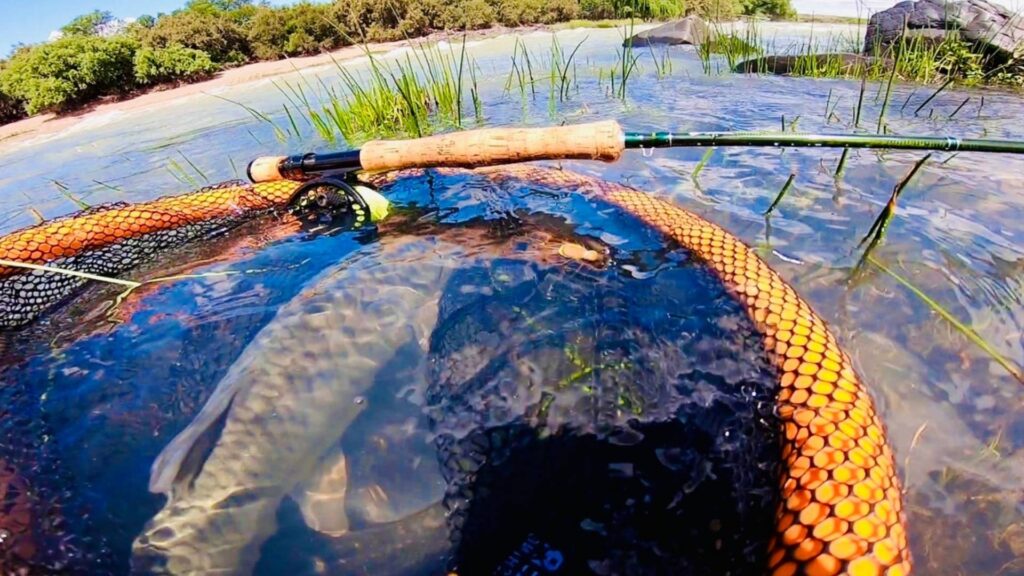
Many anglers spend a great deal of time planning their Yellowfish trips around seasonal timing, and for good reason. Certain periods of the year often provide better opportunities for trophy Largemouth Yellowfish, while other times may produce more consistent action and actively feeding Smallmouth Yellowfish.
However, even the best seasonal planning cannot guarantee ideal fishing conditions.
Orange River water conditions can change quickly. Rising river levels, discoloured water, cold fronts, thunderstorms, falling temperatures, and shifting pressure systems can all influence how Yellowfish behave from one day to the next. Conditions that produced aggressive feeding activity only a few days earlier may suddenly result in far more cautious fish.
For this reason, experienced anglers focus less on trying to predict perfect conditions and more on understanding how fish respond when conditions change.
Successful Yellowfish fishing is not simply about arriving during the right season. It is about recognising how Orange River water conditions influence fish behaviour and adapting your approach accordingly.
While the financial investment and time committed to a fishing trip understandably create expectations, these factors should not become reasons to view changing conditions negatively. Anglers who consistently improve over time are often those who learn to work with the conditions they encounter, reading fish behaviour, adjusting their tactics, and making the most of every opportunity rather than waiting for perfect conditions that may never arrive.
Ultimately, changing conditions are part of fishing. The anglers who understand how Yellowfish react to different environmental factors are usually the ones who continue finding success, regardless of what the river presents on any given day.
How Water Temperature Affects Yellowfish Feeding Behaviour
Water temperature is one of the most important factors influencing Yellowfish behaviour on the Orange River. While anglers often focus on seasonal timing, it is the day-to-day changes in temperature that occur due to changing weather conditions have the greatest impact on feeding activity.
When water temperatures fall suddenly after a cold front or prolonged period of cooler weather, Yellowfish often become less aggressive and more cautious. Feeding activity may slow noticeably, and fish may move toward deeper, more stable water where conditions remain more consistent.
As temperatures stabilise or gradually increase, fish often become more active again. Feeding windows may lengthen, fish become more willing to move in search of food, and aggressive feeding behaviour becomes increasingly common.
One of the most common mistakes anglers make is assuming the fish have disappeared when conditions become more difficult. In reality, the fish are usually still present, but their behaviour has changed. The challenge then becomes understanding how those changes affect positioning, presentation, and lure or fly selection.
Experienced anglers often use the season as a starting point when planning a trip, as seasonal patterns provide a good indication of the conditions they are likely to encounter. However, once on the water, they still pay close attention to daily temperature trends because short-term changes can either improve fishing opportunities or make conditions more challenging. Understanding how Yellowfish respond to changing temperatures often provides valuable clues about where fish are holding, how actively they are feeding, and what adjustments may be needed to continue finding success.
How Dirty Water and Reduced Visibility Change Fish Behaviour
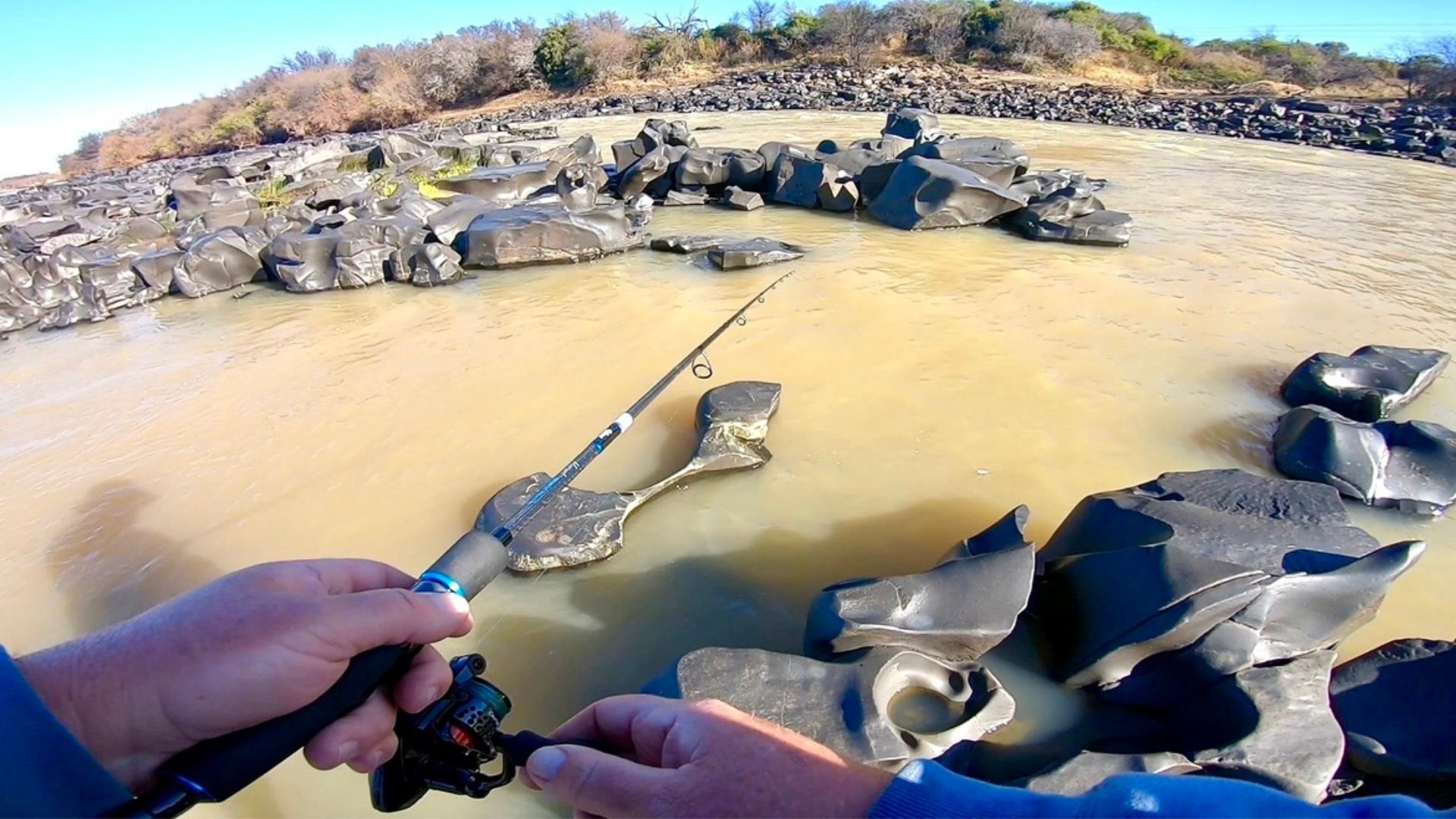
Dirty water is one of the most common Orange River water conditions anglers encounter, particularly after rainfall events, increased inflows, or rising river levels upstream. As water flow increases, the river often carries more sediment, causing water clarity to decrease.
Many anglers immediately assume dirty water means poor fishing. While reduced visibility can certainly make fishing more challenging, it does not necessarily mean Yellowfish stop feeding altogether.
Instead, fish often adapt their behaviour to the conditions. Feeding zones may change, fish may position themselves differently, and they often rely more heavily on vibration, movement, and close-range opportunities when visibility is reduced.
When water becomes dirty, the angler’s presentation often needs to shift from a visual approach to a vibration-based approach. Fish are less able to see lures or flies from a distance, so presentations that create movement, vibration, or a stronger profile can become more effective.
During these conditions, anglers frequently benefit from using presentations that create more vibration and are easier for fish to detect, focusing on likely holding areas, and presenting lures where fish have the greatest chance of detecting them.
One of the biggest mistakes anglers make is continuing to fish exactly as they would in clear water. Reduced visibility requires adjustments in presentation, lure choice and colour and the colour and size of your fly selection.
As conditions improve and water clarity returns, Yellowfish typically become more comfortable feeding over larger areas again.
Understanding how fish respond to changing visibility allows anglers to adapt more effectively rather than simply waiting for clearer water to arrive.
How Rising and Falling River Levels Affect Yellowfish
River levels on the Orange River can change significantly throughout the year due to rainfall, upstream inflows, irrigation releases, and seasonal water management. While changing water levels do influence where Yellowfish position themselves, they also have a major impact on the aquatic insect life that forms an important part of the Yellowfish diet.
When river levels rise rapidly, increased flows can disturb riverbeds, dislodge aquatic insects, and alter the habitats where many nymphs and larvae normally live. This can create short periods of increased feeding activity as food becomes more readily available in the drift. However, if water levels remain high and unstable, insect populations may take time to re-establish themselves in affected areas.
Falling water levels can also influence insect activity. As flows decrease, previously submerged areas may become exposed, while slower currents can change the distribution of aquatic insects throughout the river. Certain feeding lanes that regularly concentrate drifting insects may become less productive, while others may improve.
Because Yellowfish rely heavily on aquatic insects, changes in insect availability often influence feeding behaviour. Fish may become more active when increased flows wash food into the current, or they may feed more selectively when stable conditions allow insect populations to settle and recover.
For anglers, understanding how changing water levels affect insect life can be just as important as understanding how they affect the fish themselves. Paying attention to insect activity, drift patterns, and the availability of natural food sources often provides valuable clues about where and how Yellowfish are likely to feed.
How Pressure Changes and Storm Systems Affect Feeding Activity
Pressure changes and approaching storm systems are among the most discussed Orange River water conditions, yet they are often misunderstood by anglers.
Many anglers expect feeding activity to increase before a major weather change, and while this can happen, it should not be treated as a reliable rule. Yellowfish do not always respond in the same way to approaching weather systems. Gradual changes in barometric pressure ahead of a significant weather event can sometimes trigger increased feeding activity, but sudden pressure changes tend to have the most negative influence on feeding behaviour. Fish often remain in the same general areas, but their feeding activity can become noticeably less aggressive, less consistent, and more difficult to predict.
Thunderstorms can have an even greater influence when they are accompanied by rapid temperature changes, increased cloud cover, rainfall, or rising water levels. Yellowfish often become noticeably more skittish during thunderstorms, particularly when thunder is frequent and conditions are unstable. These factors often combine to create multiple environmental changes at the same time, making fish behaviour more difficult to predict.
One of the biggest mistakes anglers make during unstable weather conditions is continuing to fish exactly as they would during periods of stable weather. While feeding activity often slows during changing conditions, there can be important exceptions. Heavy wind ahead of a major weather change can often trigger highly productive feeding activity for Largemouth Yellowfish, despite changing barometric pressure. The wind and wave action create conditions where these fish feel more relaxed and are less easily detected by other predators, allowing them to hunt baitfish far more aggressively. When feeding activity does slow, presentations often need to become more deliberate, more accurate, and better suited to the behaviour of the fish on that particular day.
As weather systems move through and conditions begin stabilising, Yellowfish often return to more normal feeding patterns. Understanding how fish respond to changing weather conditions allows anglers to adapt more effectively and maintain realistic expectations when conditions become challenging.
Why Adapting Matters More Than Waiting for Perfect Conditions
One of the biggest lessons anglers learn on the Orange River is that perfect conditions rarely exist for long. Water temperatures change, river levels rise and fall, clarity improves and deteriorates, weather systems move through, and fish behaviour constantly adjusts in response.
Many anglers spend considerable time searching for the perfect season, perfect weather forecast, or perfect river conditions. While planning around favourable seasonal conditions can certainly improve the odds, no angler can fully control the conditions they will encounter once they arrive on the water.
The anglers who consistently improve over time are usually not those who only fish during ideal conditions. Instead, they are the anglers who learn to observe what is happening around them, identify how fish behaviour has changed, and adjust their approach accordingly.
Difficult conditions often provide some of the greatest learning opportunities. They force anglers to think more carefully about positioning, presentation, lure selection, fly choice, and fish behaviour. Understanding why fish are feeding differently can often be more valuable than simply catching fish under ideal conditions.
The reward is not always perfect fishing. The reward is learning how Yellowfish respond to changing Orange River water conditions and becoming a more adaptable angler. Those lessons often continue improving success long after the conditions that taught them have passed.
Learning to Read Conditions on the Orange River
Learning to read Orange River water conditions and understand Yellowfish feeding behaviour is a skill that develops over time. The more time anglers spend observing the river, the more they begin recognising how different conditions influence fish behaviour and feeding activity.
Experienced anglers rarely focus on a single factor in isolation. Instead, they look at the complete picture. Water temperature, clarity, river levels, weather patterns, current speed, insect activity, and fish behaviour all provide clues about what is happening beneath the surface.
One of the most valuable habits anglers can develop is paying attention to patterns. A sudden drop in temperature, dirty water after rainfall, rising river levels, or approaching weather systems may all influence how fish behave. Over time, recognising these patterns helps anglers make better decisions about where to fish, how to present a lure or fly, and what adjustments may be needed throughout the day.
Learning to read conditions also helps anglers manage expectations. Some days produce aggressive feeding fish that seem willing to attack almost anything. Other days require patience, experimentation, and careful observation. Neither situation is necessarily better or worse. Both provide opportunities to learn more about how Yellowfish interact with their environment.
The anglers who consistently improve are often those who remain curious. Rather than becoming frustrated when conditions change, they use each session as an opportunity to better understand the relationship between Orange River water conditions, fish behaviour, and successful presentation.
Anglers who respect nature also learn to appreciate these shifts in feeding behaviour. This is nature in action, and embracing these changes is part of what defines us as anglers. Our sport is deeply connected to the natural world, and learning to enjoy what nature has to offer—even when conditions become challenging—is an important part of the journey. By leaning into these challenges rather than resisting them, anglers develop a deeper understanding of the river, the fish, and the environment around them. In many ways, it is these experiences that help create truly great anglers.
Final Thoughts on Orange River Water Conditions
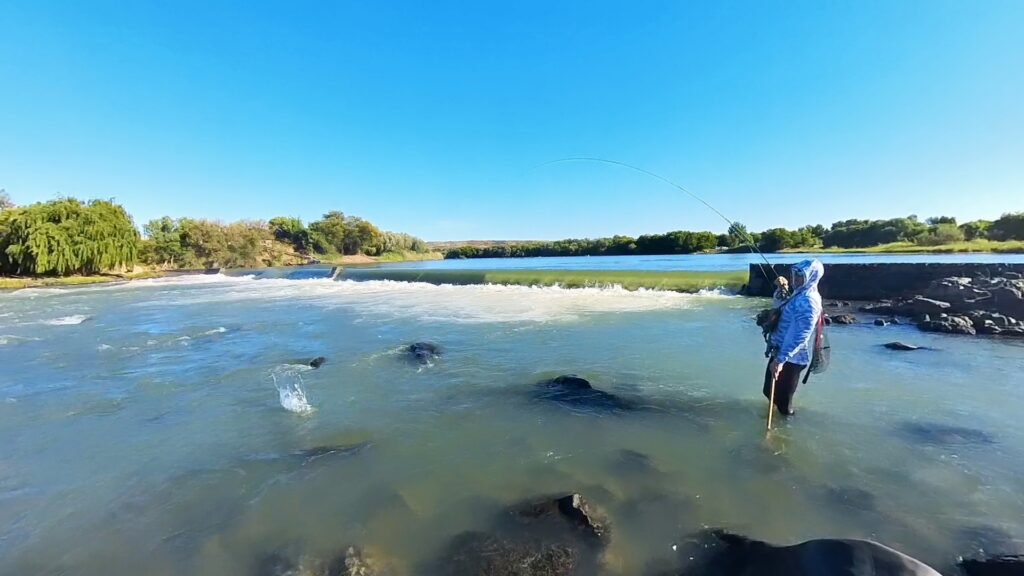
Orange River water conditions are constantly changing, and no angler can control every factor that influences Yellowfish behaviour. Water temperature, clarity, river levels, insect activity, weather systems, and seasonal patterns all interact to create unique conditions on any given day.
While seasonal timing can improve the odds of encountering favourable conditions, successful Yellowfish fishing ultimately depends on understanding how fish respond to those conditions and adapting accordingly.
As a guide, I regularly see two very different reactions when conditions do not match expectations. Given the financial planning, travel costs, and time invested in a fishing trip, disappointment is understandable when river conditions turn out differently than anticipated.
However, the anglers who often gain the most from these situations are those who choose to embrace the challenge. Rather than focusing on the conditions they hoped for, they focus on understanding the conditions they have been given. They ask questions, observe fish behaviour, adapt their presentations, and use the experience as an opportunity to learn.
In many cases, these anglers leave with something far more valuable than a successful day’s fishing. They leave with a deeper understanding of the river, greater confidence in their ability to adapt, and knowledge that continues helping them long after the trip has ended. Interestingly, these are often the same anglers who eventually become the most successful when conditions become difficult because they have learned how to work with changing conditions rather than against them.
If you would like to continue building your understanding of Yellowfish behaviour, you may also find value in exploring our guides on the best time to catch Yellowfish on the Orange River, why Yellowfish follow lures without striking, lure presentation and casting angles, fly fishing for Yellowfish on the Orange River, and why shallow diving lures work so well for Orange River Yellowfish. Each of these topics explores a different piece of the puzzle and can help you become a more adaptable and informed angler.
The goal is not to wait for perfect conditions. The goal is to understand the conditions you are given, adapt to them, and continue learning from every experience on the river. As anglers, we are fortunate to enjoy our sport in a natural environment, and the Orange River remains one of the true jewels of the South African fishing experience. Every effort should be made to appreciate, respect, and protect this remarkable resource so that future generations can continue to learn from and enjoy everything the river has to offer.
Learn to Read the River Like a Guide
Understanding Orange River water conditions is one thing. Learning how to apply that knowledge on the water is where the real difference is made.
During guided trips, I help anglers understand how water temperature, river levels, visibility, current flow, and fish behaviour influence where Yellowfish hold and how they feed.
If you’d like to shorten the learning curve and gain practical experience on the Orange River, get in touch to discuss available guided fishing dates.