When anglers ask me about the best lures for Yellowfish, my answer is usually not a simple one. While lure choice certainly matters, I have found that understanding where, when and why to use a lure is far more important than simply owning it.
Over the years I have accumulated many lures, just like most anglers. Some have performed exceptionally well, while others have spent more time in the tackle box than in the water. The difference was rarely the lure itself. More often, it came down to understanding the conditions the lure was designed for and recognising when those conditions were present on the river.
There is nothing wrong with owning a large collection of lures. If you understand what each lure was designed to do, when to use it and where it performs best, then having many options can be a great advantage. The challenge comes when anglers own dozens of lures but have little understanding of the conditions each lure was designed for. A tackle box full of lures does not automatically make lure selection easier. In many cases it creates uncertainty, with anglers constantly changing lures instead of understanding what the fish and the water are telling them.
For me, successful artlure fishing is not about owning the most lures. It is about knowing your lures by heart. Over time, every successful lure develops a history. You learn where it performs best, how it behaves in current, how deep it runs, what type of structure suits it and what fish behaviour it triggers. Eventually the lure becomes more than a piece of tackle. It becomes a tool with a specific purpose.
As a Pro Staff member for Rapala VMC South Africa, the lures discussed in this article are all Rapala lures that I personally fish with and guide with on the Orange River. There are many excellent Yellowfish lures available and many more Rapala models capable of catching both Largemouth and Smallmouth Yellowfish. The lures covered in this article are simply the ones that have earned a permanent place in my tackle box through years of fishing and guiding experience.
Together, these lures allow me to confidently cover almost every situation I encounter on the Orange River. Whether I am targeting fish feeding in shallow scum lines, working deep pools, fishing vertical rock faces, covering large stretches of water or presenting a lure to deeper holding Largemouth Yellowfish, there is a lure within this selection that allows me to fish effectively.
The purpose of this article is not to tell anglers which lure they must buy. Instead, it is to explain how I select the right lure for specific conditions and why each of these lures has earned its place in my Yellowfish fishing system.
My Yellowfish Lure Selection Philosophy
Before discussing individual lures, it is important to understand the thinking behind how I select them. Over time I have developed a lure selection system based on fish behaviour, water conditions and practical experience gained while fishing and guiding on the Orange River.
Why I Prefer Shallow-Diving Lures
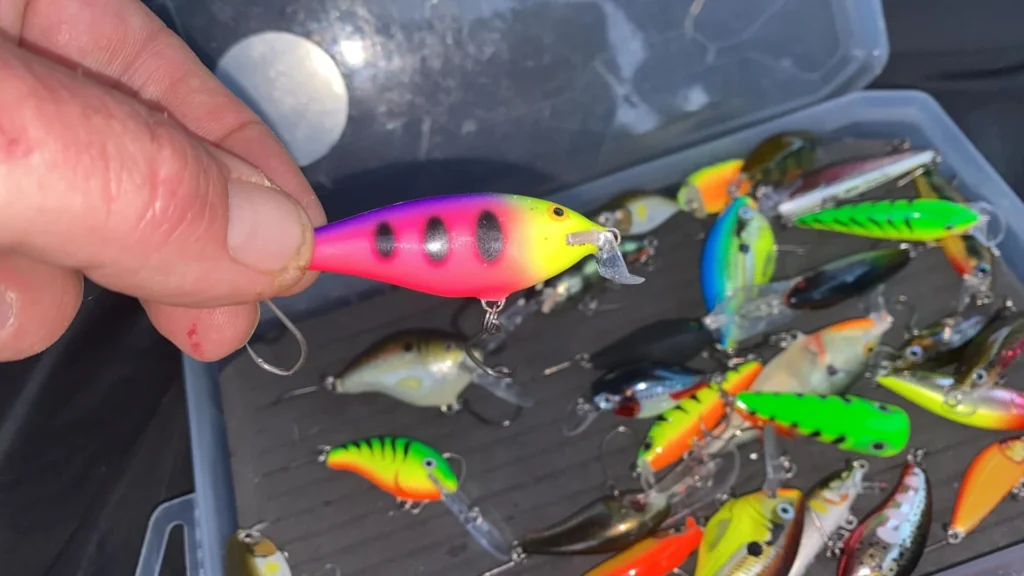
One of the biggest influences on my lure selection is structure. The Orange River is full of rocks, ledges and submerged obstacles that create ideal feeding areas for both Largemouth and Smallmouth Yellowfish.
For this reason, shallow-diving lures are usually my first choice. A lure cannot catch fish if it is constantly snagged on structure. I would rather fish a lure that spends more time in the strike zone than one that spends its time hanging on rocks.
This does not mean deep-diving lures do not have a place. They certainly do. However, I only reach for them when conditions require me to fish deeper in the water column and when I can do so without constantly losing lures to structure.
Why I Replace Treble Hooks with VMC Mangrove Inline Singles
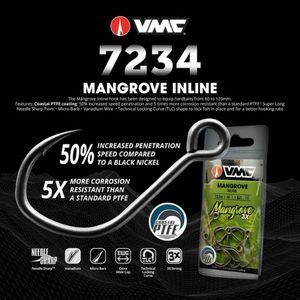
Every lure I fish for Yellowfish is fitted with VMC Mangrove Inline Single Hooks.
The first reason is conservation. Yellowfish are a special species and deserve to be treated with care. Inline singles are easier to remove, reduce handling time and help minimise damage to the fish. They support the catch-and-release approach that is an important part of my guiding philosophy.
The second reason is practical. Inline singles reduce snagging around rocks and structure. This allows me to fish confidently in areas where Yellowfish actively feed without constantly worrying about hanging up on every cast.
The thick hook gauge of the VMC Mangrove Inline Single also gives me confidence when targeting large Yellowfish around structure.
Why I Tie Directly to the Lure
I prefer tying my lures directly to the leader rather than using lure clips.
This is a system I have confidence in and use across all my Yellowfish lures. The direct connection keeps my setup simple and allows the lure to perform as it was designed without additional hardware potentially affecting its action.
How I Read Conditions Before Choosing a Lure
One of the biggest mistakes anglers make is selecting a lure before they have properly read the water.
Before making my first cast, I am constantly looking for clues.
Are fish feeding near the surface?
Are baitfish active?
Is there visible surface activity?
Are fish holding deep?
Am I fishing strong current, a deep pool, a shallow margin or a vertical rock face?
The answers to these questions determine which lure I choose.
A lure should not be selected because it is your favourite colour or because it caught a fish last week. It should be selected because it matches the conditions in front of you.
The more time you spend understanding how each lure behaves in different situations, the easier these decisions become. Eventually lure selection becomes less about guesswork and more about understanding exactly what tool is required for the job.
Best Yellowfish Lure for Shallow Water and Deep Water: Rapala X-Light Series
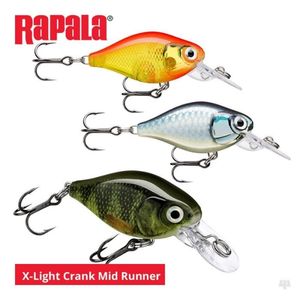
The Rapala X-Light series has become one of my most trusted lure ranges for both Largemouth and Smallmouth Yellowfish. The models I use most often are the X-Light Midrunner, X-Light Shallow Runner and X-Light Shad 04.
At only 4 grams, these lures have earned a permanent place in my tackle box and are often my first choice when fishing shallow water, river margins, rocky structure and feeding areas where a subtle presentation is important. Even in deep water they do not dive deep but create reactions near the surface.
One of the reasons I have so much confidence in the X-Light range is that these small lures consistently catch quality fish. My biggest Largemouth Yellowfish caught on a Rapala X-Light, weighing 9.5 kg, was caught on an X-Light Midrunner. That fish alone proved to me that trophy Yellowfish are not deterred by small lures.
The X-Light Midrunner is particularly effective in streams and flowing water where I want the lure to reach a little more depth while still avoiding excessive contact with structure. The X-Light Shallow Runner excels when Yellowfish are feeding in shallow water, especially water less than knee deep. These lures allow me to fish confidently around rocks and obstacles because they duck and dive through structure without constantly snagging.
The X-Light range is also one of my favourite lure selections when fishing current. I often cast across or slightly upstream and allow the lure to swing naturally through the feeding zone. In stronger current, the lure produces a fast vibration with very little retrieve input required from the angler. Because of this, I generally keep my retrieve speed slow and allow the current to do much of the work.
In slower pools, I retrieve only fast enough to maintain contact with the lure and feel the vibration through the rod tip. Many anglers retrieve too quickly, but I have found that a slower presentation is often far more effective for Yellowfish.
Another area where the X-Light range shines is when Yellowfish are feeding in scum lines. Fish feeding in these situations are often extremely wary of large splashes and unnatural disturbances. The small size and light weight of the X-Light range allows it to enter the water with minimal disturbance. Of all the lures in my tackle box, the X-Light series produces some of the smallest splashdowns, making it ideal when casting to actively feeding fish.
One important observation I have made over many years of targeting Smallmouth Yellowfish is how often they strike a lure on the drop. Many anglers focus only on the retrieve, but some of the most aggressive takes occur while the lure is landing on the water surface.
This is especially important to remember when fishing smaller lures such as the X-Light series.
Managing the line carefully during the lure descent and drop often reveals takes that would otherwise go unnoticed. Important Note: you need to be in contact with the lure when it drop, avoid line bubble or current drag on the lure on the drop. The small splash from the lure gets the yellowfish attention, if you don’t have direct contact with the lure you won’t feel the take and if the current immediately pulls the lure away the presentation will be looking unnatural to the yellowfish.
On a fast-paced fishing session you may catch nine out of ten Smallmouth Yellowfish on the drop when you get this presentation right.
The X-Light range is available in natural patterns, flash patterns and brighter orange and red colours. While colour certainly has its place, presentation, lure depth and the ability to fish effectively through the strike zone remain my primary considerations when selecting a lure.
My preferred hook setup is a single size 4 VMC Mangrove Inline Single Hook fitted to the rear hook position only. This simple setup supports Yellowfish conservation, reduces snagging and allows the lure to move naturally through structure and current.
For anglers targeting Yellowfish in shallow water, current seams, margins and scum lines, the X-Light range remains one of the most versatile and effective lure families I have ever fished.
Best Yellowfish Lure for Distance and Wind: Rapala BX Brat 3"
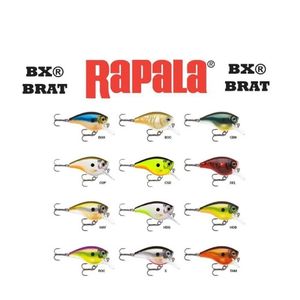
The Rapala BX Brat 3″ is one of my favourite lures when targeting both Largemouth and Smallmouth Yellowfish around structure. One of the reasons I have so much confidence in this lure is because it fishes very similarly to the X-Light range while offering additional casting distance and a stronger presence in the water.
One of the situations where I reach for the BX Brat is when Yellowfish are aggressively feeding on insects close to structure. The signs are usually easy to spot. Fish can often be seen rising regularly, feeding just below or on top of the surface, while midges, gnats and other small insects are present at the water line. When I see this type of activity, the BX Brat becomes one of my preferred lure choices when conditions are in its favour.
Unlike the subtle entry of the X-Light series, the BX Brat lands with a more noticeable splash and immediately makes its presence known in the water. Combined with its slow wobbling action, it can trigger aggressive reaction strikes from actively feeding Yellowfish.
The BX Brat 3″ is also one of my favourite lures for casting tight against structure where Yellowfish are feeding. It is an exceptionally durable lure, and one of the reasons I fish it confidently around rocky areas is that the occasional accidental cast directly into rocks rarely causes any damage.
It performs exceptionally well when swung naturally through feeding areas. I also use it extensively when casting and retrieving along river margins.
One of the reasons the BX Brat performs so well around structure is that it only dives to approximately three feet. This allows me to work the lure over rocky structure and feeding zones without constantly worrying about snagging. Like most of the lures I use for Yellowfish, it fits my preference for shallow-diving lures that spend more time in the strike zone and less time hanging on the bottom.
The biggest advantage the BX Brat has over the X-Light range is casting distance. The additional weight allows the lure to cast significantly further, making it an excellent choice on windy days or whenever I need to reach a specific area that is difficult to access with lighter lures.
When the X-Light is simply too light to reach the target area, the BX Brat is often my next choice.
Colour options are extensive, but my confidence colours for Yellowfish remain green and olive patterns, flash patterns and darker colour variations.
My preferred hook configuration is a size 4 VMC Mangrove Inline Single Hook on the front hook position and a size 1 VMC Mangrove Inline Single Hook on the rear hook position. While this setup works well, the hooks can occasionally tangle. Although removing the front hook is an option, I prefer fishing the lure with both hooks fitted and simply managing any occasional tangles.
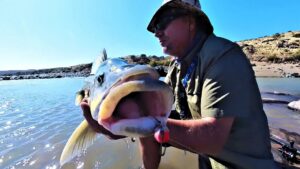
One of my most memorable experiences with the BX Brat involved guiding Roaldt Wolhuter on the Orange River. After positioning him on a productive area, I suggested he fish the BX Brat 3″ using a swing presentation through the feeding zone. The result was a magnificent 6.2 kg Largemouth Yellowfish. The catch was captured on video and remains one of the best examples of how effective the BX Brat can be when presented correctly to feeding fish.
Best Yellowfish Lure for Natural Silhouette Presentations: Rapala Shallow Shad Rap and Jointed Shallow Shad Rap
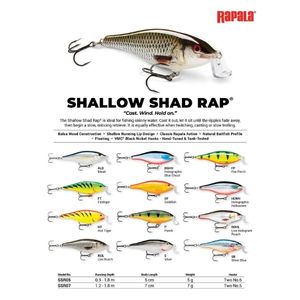
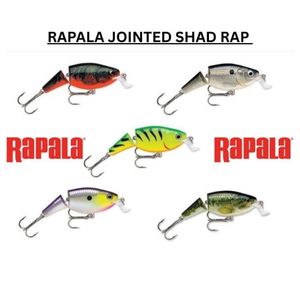
The Rapala Shallow Shad Rap and Rapala Jointed Shallow Shad Rap are two lures that have earned a permanent place in my Yellowfish tackle box. While both belong to the same lure family and are effective in similar situations, the Jointed Shallow Shad Rap has a unique and unmatched action that sets it apart from almost any other lure I have fished.
One of the biggest misconceptions anglers have is that shallow-diving lures can only be effective in shallow water. My experience on the Orange River has proven the opposite. These lures have accounted for some of my best Largemouth Yellowfish and I caught my biggest Largemouth Yellowfish on one of these lures from water approximately 16 metres deep, even though the lure was running close to the surface.
The reason for this lies in one of the greatest strengths of a shallow-diving lure. Rather than diving deep and constantly changing position in the water column, a shallow-diving lure maintains a consistent silhouette close to the surface. Largemouth Yellowfish often target baitfish in exactly the same way. That consistent silhouette becomes a highly effective trigger, even when fish are holding in deep water.
I use both the Shallow Shad Rap and Jointed Shallow Shad Rap extensively in strong current. They are particularly effective when cast across current and allowed to swing naturally through the feeding zone. They also perform exceptionally well in deep water, along margins and when Yellowfish are actively feeding in scum lines.
Although these lures can be retrieved at a moderate speed when conditions require it, I generally prefer a very slow retrieve. Their action does not rely on heavy vibration. Instead, they produce a subtle and delicate swimming action that is perfectly suited to clear water conditions where Yellowfish often become more selective.
This subtle action is one of the reasons I have so much confidence in these lures. Rather than creating excessive vibration, they present a natural profile and silhouette in the water. In clear water conditions, that natural presentation can often outperform more aggressive lures.
For me, the Jointed Shallow Shad Rap is the standout of the two. Its action is unique and unlike any other lure in my tackle box. One of its greatest strengths is that it continues to produce an attractive action even in very slow-moving water. Few lures perform well when fished this slowly, but the Jointed Shallow Shad Rap remains alive in the water at speeds where many other lures lose their effectiveness.
It can even be almost dead-sticked while still maintaining action. Watching this lure work in the water is often enough to understand why it has become one of my confidence lures for Yellowfish. The movement is subtle, natural and highly effective, making it one of the most rewarding lures to fish when conditions call for a finesse presentation.
The colour range is not extensive, but it offers everything I need when targeting Yellowfish. My confidence colours are natural patterns, flash silver-blue patterns, Firetiger and Perch. These colours have consistently produced fish for me across a wide range of water conditions.
My preferred hook configuration for both the Shallow Shad Rap and Jointed Shallow Shad Rap is a size 4 VMC Mangrove Inline Single Hook on the front hook position and a size 1 VMC Mangrove Inline Single Hook on the rear hook position. This setup provides excellent fish-holding power while supporting Yellowfish conservation and reducing snagging compared to factory treble hooks.
Best Yellowfish Lure for Aggressive Feeding Fish: Rapala Shad Rap Elite 5.5 and 7.5
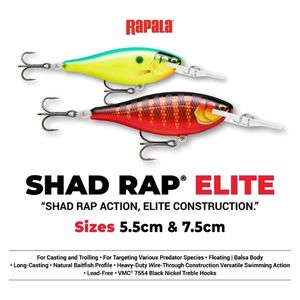
The Rapala Shad Rap Elite is a lure that has quickly earned a place in my Yellowfish tackle box. I carry both the 5.5 and 7.5 sizes because each serves a specific purpose on the Orange River.
The Shad Rap Elite 5.5 is my preferred choice when fishing deep pools where the drop-off lies close to the margin. In these situations, I can retrieve the lure parallel to the bank while keeping it working close to the productive water where Yellowfish often hold. This makes it an excellent lure for targeting fish positioned along steep drop-offs and structure-rich margins.
The Shad Rap Elite 7.5 fills a different role. This is the lure I reach for when I want to cover large areas of water efficiently. One of its greatest strengths is its casting ability. The lure casts exceptionally well and allows me to reach distant structure, cover large deep pools and search for actively feeding fish. When distance becomes important, the 7.5 is often my first choice.
One of the standout characteristics of both sizes is their aggressive action. Compared to some of the more subtle lures in my tackle box, the Shad Rap Elite creates a much stronger presence in the water. This makes it particularly effective when Yellowfish are feeding aggressively and actively hunting baitfish. In stained or dirty water, that aggressive vibration becomes almost like a dinner bell for Yellowfish, helping them locate the lure more easily when visibility is reduced.
Although both Largemouth and Smallmouth Yellowfish will readily take the Shad Rap Elite, I find myself using it most often when targeting Largemouth Yellowfish. The combination of casting distance, aggressive action and the ability to work productive water efficiently makes it a valuable lure when searching for larger fish.
Another important characteristic of the Shad Rap Elite is its ability to reach depth. Compared to many of the shallow-diving lures I favour, the Shad Rap Elite is capable of getting down quickly and maintaining depth throughout the retrieve. This makes it particularly effective when fish are holding deeper along margins, drop-offs and structure.
Retrieve speed is an important consideration when fishing the Shad Rap Elite. In strong current, I prefer a very slow retrieve and allow the flow itself to generate much of the lure’s action. In slower deep pools, retrieve speed should be adjusted according to the feedback coming through the rod tip.
The goal is not to retrieve the lure as quickly as possible. Instead, I want to feel the lure’s knock or wobble through the rod. If the lure is working correctly, the rod tip provides clear feedback. If the resistance becomes excessive and starts loading or bending the rod tip unnecessarily, the retrieve speed is often too fast. Learning to fish the lure through rod-tip feedback is one of the keys to getting the best performance from the Shad Rap Elite.
The colour range is extensive and offers plenty of options for different conditions. My approach remains simple. In clear water I prefer natural patterns, while in tinted water I favour darker colours that provide a stronger silhouette and remain easier for fish to locate.
My preferred hook configuration for the Shad Rap Elite 5.5 is a size 4 VMC Mangrove Inline Single Hook on both the front and rear hook positions. For the larger 7.5 model, I use a size 1 VMC Mangrove Inline Single Hook on both the front and rear hook positions. As with all the lures I use for Yellowfish, this setup supports conservation, reduces snagging and provides excellent fish-holding ability.
Best Yellowfish Lure for Vertical Structure: Rapala Shad Dancer 05
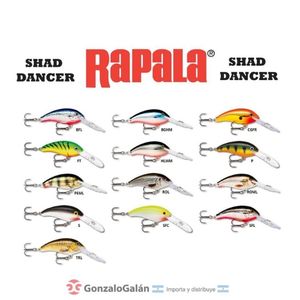
The Rapala Shad Dancer 05 is a very specific lure in my Yellowfish tackle box. Unlike some of the other lures I use across a wide range of situations, the Shad Dancer is a lure I reserve for particular structures and presentations where its unique characteristics can be fully utilised.
I use the Shad Dancer 05 for both Largemouth and Smallmouth Yellowfish and I have found it to be especially effective around steep structure and vertical drop-offs. One of my favourite places to fish this lure is along vertical rock faces where deep water lies close to the bank. In these situations, the lure’s ability to dive quickly becomes a major advantage.
The large diving lip is one of the defining features of the Shad Dancer. It allows the lure to reach its working depth rapidly and maintain an attractive action close to structure. This makes it particularly effective when fishing steep banks, drop-offs and other areas where fish are holding deeper in the water column.
One of the most interesting aspects of fishing the Shad Dancer is what happens at the end of the retrieve. As the lure approaches the rod tip and begins rising through the water column, it often triggers reaction strikes. This final lift toward the surface can be enough to provoke Yellowfish into committing to the lure after following it through the retrieve.
The action of the Shad Dancer is one of its greatest strengths. The large lip creates excellent movement in the water and gives the lure a very distinctive swimming action. While the lure does contain a rattle, it is extremely subtle and never feels overpowering. This subtle rattle is one of the reasons I have confidence in the lure when conditions become difficult and fish are behaving cautiously or appear skittish.
Like all lure designs, there is a trade-off. The large diving lip that gives the Shad Dancer its excellent diving ability also reduces casting performance. Compared to lures such as the BX Brat or Shad Rap Elite, casting distance is more limited. For me, however, the lure’s ability to reach depth quickly and produce an effective action around structure more than compensates for the reduced casting distance.
The Shad Dancer is also a highly effective lure for trolling behind a kayak. The aggressive diving characteristics allow the lure to reach productive depths efficiently while maintaining an attractive action throughout the troll.
Retrieve speed is generally slow to medium depending on the conditions. As with many Yellowfish lures, I prefer to let the lure work naturally rather than forcing excessive speed into the presentation.
Colour selection follows the same approach I use with many of my other Yellowfish lures. In clear water I prefer natural patterns that provide a realistic presentation. In tinted water I favour darker colours that create a stronger silhouette and remain easier for fish to identify.
My preferred hook setup is a size 4 VMC Mangrove Inline Single Hook configuration. As with all my lure setups, this supports Yellowfish conservation, reduces snagging and provides reliable hook-holding ability when targeting both Largemouth and Smallmouth Yellowfish.
Best Yellowfish Lure for Precise Depth Control: Rapala Countdown Elite 7.5
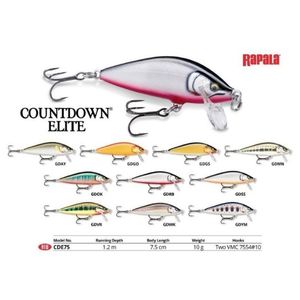
The Rapala Countdown Elite 7.5 is one of the most precise depth-control lures in my Yellowfish tackle box. Unlike floating or diving lures that rely primarily on their lip design to reach a specific depth, the Countdown Elite is a sinking lure that allows me to target a precise level in the water column.
The name Countdown Elite comes from the lure’s ability to be counted down before the retrieve begins. This allows me to fish a specific depth with a high degree of consistency and accuracy. As a general guideline, the lure sinks at approximately one metre every two seconds. If I want to fish five metres deep, I simply allow the lure to sink for roughly ten seconds before beginning the retrieve.
This ability to control depth is what makes the Countdown Elite so valuable. It allows me to systematically work different levels of the water column and present the lure exactly where I believe the fish are holding.
The Countdown Elite is primarily a Largemouth Yellowfish lure in my tackle box. One of the first things I look for when arriving at a spot is visual evidence of feeding activity. No surface strikes, baitfish inactivity and fish not showing themselves all provide clues that the fish may be feeding deeper in the water column.
When there are no obvious signs of Largemouth Yellowfish feeding near the surface, the decision to fish a Countdown Elite often becomes obvious. Rather than trying to pull fish up to a shallow-diving lure, I can take the presentation directly to the depth where I believe the fish are holding.
One of the strengths of the Countdown Elite is its action. Rather than producing heavy vibration, the lure has a natural horizontal wobble that closely resembles a fleeing baitfish. The movement is subtle, realistic and highly effective when a natural presentation is required.
My preferred retrieve is a medium-paced retrieve that allows the lure to maintain its natural action. I will often mix in two or three short jerks during the retrieve, followed by a brief pause. These small changes in direction and speed frequently trigger strikes from following fish. The key is not to overwork the lure. A few subtle inputs are usually enough to create the reaction I am looking for, but even a straight retrieve works exceptionally well.
Colour selection follows the same approach I use with many of my other Yellowfish lures. In clear water I prefer natural patterns that provide a realistic presentation. In tinted water I favour darker colours that create a stronger silhouette and remain easier for fish to identify.
My preferred hook configuration is a size 4 VMC Mangrove Inline Single Hook on the front hook position and a size 1 VMC Mangrove Inline Single Hook on the rear hook position. This setup provides excellent hook-holding ability while supporting Yellowfish conservation and reducing snagging compared to factory treble hooks.
For anglers who want complete control over the depth they are fishing, the Countdown Elite is one of the most effective tools available. Its combination of precise depth control, natural baitfish action and excellent casting performance makes it a valuable option whenever Largemouth Yellowfish are holding deeper in the water column.
Best Yellowfish Lure for Deep Fish Holding Against Structure: Rapala Shadow Rap Solid Shad 06
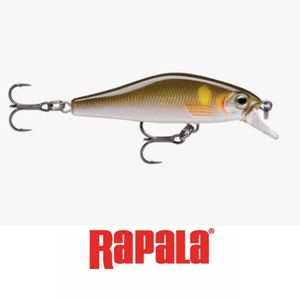
The Rapala Shadow Rap Solid Shad 06 is one of the most specialised Largemouth Yellowfish lures in my tackle box. While many lures become effective only once the retrieve begins, the Shadow Rap Solid Shad starts producing opportunities the moment it enters the water.
I primarily use this lure when targeting Yellowfish holding against vertical rock faces and steep structure. These areas often reveal an interesting pattern. Small Yellowfish may be visible feeding near the surface, creating the impression that all the fish are feeding high in the water column. In reality, the larger fish are often positioned deeper while remaining tight to the same structure.
This is where the Shadow Rap Solid Shad excels.
The lure is a compact, fast-sinking hard-plastic shad profile designed to cut through heavy current and reach productive depths quickly. Unlike many sinking lures, it does not simply dive nose-first through the water column. One of the unique characteristics of the Shadow Rap Solid Shad is the way it sinks.
The lure remains horizontal during the descent and falls almost vertically. This creates a completely different presentation compared to lures such as the Countdown Elite, which carries more weight forward and typically sinks nose-first at an angle.
For me, this is one of the lure’s greatest strengths.
Because the lure maintains a horizontal position while sinking and produces a natural side-to-side movement during the drop, it is often struck before the retrieve even begins. Many fish intercept the lure during the descent, making the drop itself an important part of the presentation rather than simply a way to reach depth.
This ability to fish effectively on the drop makes the Shadow Rap Solid Shad particularly valuable when targeting larger Largemouth Yellowfish holding deeper against rock faces and structure.
Fishing this lure effectively requires close attention to your line during the descent. Because many strikes occur while the lure is sinking, any sudden twitch, hesitation or unnatural movement of the line should be treated as a take and met with an immediate hook set.
One of the challenges is that you cannot maintain direct contact with the lure during the drop. Keeping tension on the line will hinder the lure’s natural horizontal sinking action and reduce the effectiveness of the presentation. Instead, I allow the lure to sink on a controlled slack line while carefully watching for any indication that a fish has intercepted it.
The lure’s fast-sinking characteristics also allow me to cast directly against vertical rock walls and quickly reach the depth where the fish are holding. Instead of spending valuable time retrieving a lure to work down through the water column, the Shadow Rap Solid Shad gets into the strike zone rapidly and directly below its drop point.
Colour selection follows the same approach I use with many of my other Yellowfish lures. In clear water I favour natural patterns, while in tinted water I prefer darker colours that create a stronger silhouette and remain easier for fish to identify.
My preferred hook setup is a size 4 VMC Mangrove Inline Single Hook on both the front and rear hook positions. This setup supports Yellowfish conservation, reduces snagging and provides excellent hook-holding ability.
For anglers targeting deeper Largemouth Yellowfish positioned against steep structure, the Shadow Rap Solid Shad offers a presentation that very few lures can replicate. Its ability to sink horizontally, fish effectively on the drop and reach productive depths quickly makes it one of the most unique lures in my tackle box.
How I Build Confidence in a Yellowfish Lure
One of the questions I am often asked is how I develop confidence in a particular lure. The answer is simple: time on the water.
Every lure in this article has earned its place through countless hours of fishing the Orange River. None of them became confidence lures after catching a single fish. Confidence develops when a lure repeatedly proves itself under different conditions, seasons and situations.
For the angler who commits to learning a lure’s strengths and weaknesses, every lure eventually develops its own history.
You begin to understand where it performs best. You learn what type of water suits it, how it behaves in current, how deep it runs, what retrieve speed it prefers and what type of fish behaviour it triggers.
Eventually you stop thinking of it as just another lure in your tackle box and start viewing it as a specialised tool designed for a specific job.
There is nothing wrong with owning a large collection of lures. In fact, anglers who understand every lure they own often have a significant advantage because they have more tools available to solve different fishing situations.
The problem is not owning many lures. The problem is owning many lures without understanding them.
Many anglers spend more time changing lures than learning them. A lure may catch fish in one situation and fail completely in another. Without understanding why, it becomes difficult to build confidence in it or know when to use it again.
One of the biggest lessons Yellowfish have taught me is that understanding where and when to use a lure is often more important than the lure itself. A perfectly selected lure presented in the correct situation will usually outperform a more expensive or more popular lure being fished in the wrong conditions.
This is why I encourage anglers to spend time learning their lures. Fish them in different conditions. Experiment with retrieve speeds. Observe how they behave in current. Watch how they react around structure. Pay attention to how Yellowfish respond to them.
The more experience you gain with a lure, the more valuable it becomes.
Eventually you reach a point where lure selection becomes instinctive. You see a stretch of water, recognise the conditions and immediately know which lure gives you the best chance of success. That confidence is not bought in a tackle shop. It is earned through time on the water.
For me, that is one of the most rewarding aspects of artlure fishing. Knowing your lures by heart and understanding exactly when and where to use them adds another level of enjoyment to the sport and helps turn experience into consistent success.
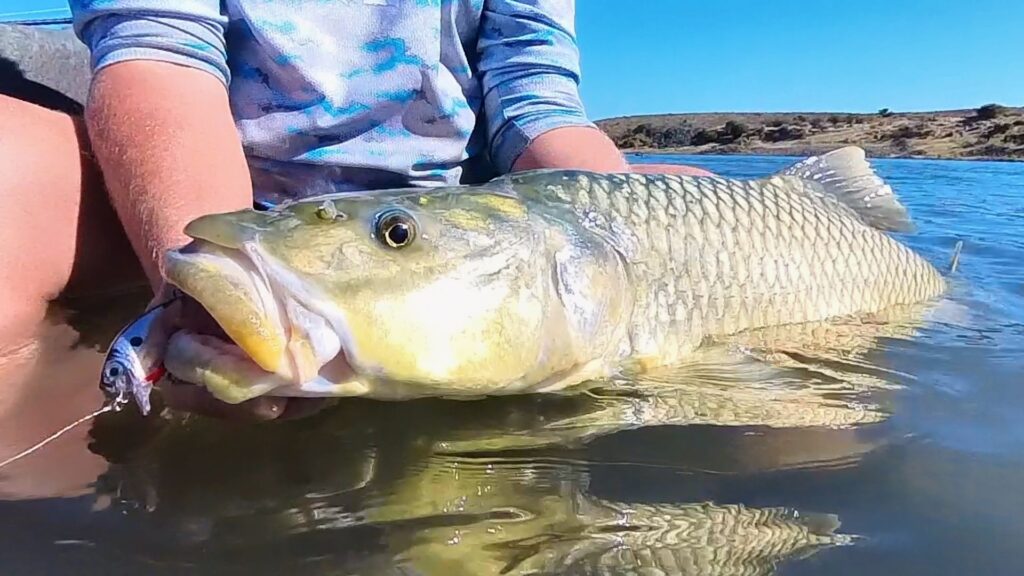
Final Thoughts on the Best Lures for Yellowfish
There are many excellent Yellowfish lures available today, and there are certainly many more lures capable of catching both Largemouth and Smallmouth Yellowfish than those discussed in this article.
The purpose of this article was never to create a complete list of every lure that can catch Yellowfish. Instead, it was to explain the lures I personally trust, why I trust them and, most importantly, the conditions that determine when I use them.
Every lure discussed here has earned its place through years of fishing and guiding on the Orange River with me. Together they form a system that allows me to confidently approach almost any situation the river presents.
Whether I am targeting fish feeding in shallow scum lines, covering water in strong wind, fishing deep pools, working vertical rock faces, targeting aggressive feeding fish or presenting a lure to deeper holding Largemouth Yellowfish, there is a lure within this selection that allows me to fish effectively.
More importantly, each lure has a specific purpose.
The X-Light series allows me to fish shallow water, current seams and scum lines with confidence.
The BX Brat gives me additional casting distance and a stronger presence around actively feeding fish.
The Shallow Shad Rap and Jointed Shallow Shad Rap provide a subtle silhouette-driven presentation that excels in clear water and even over deep fish.
The Shad Rap Elite allows me to cover water efficiently and target aggressive fish with a stronger vibration profile.
The Shad Dancer excels around vertical structure and situations where I need a lure to dive quickly and maintain depth.
The Countdown Elite gives me precise control over where my lure is working in the water column.
The Shadow Rap Solid Shad provides a unique presentation for targeting deeper fish holding tight against structure and allows me to fish effectively on the drop.
While each lure has its own strengths, the most important lesson remains the same. Successful Yellowfish lure fishing is not about owning the most lures. It is about understanding what each lure was designed to do and recognising the conditions where it performs best.
The more time you spend learning your lures, the easier lure selection becomes. Eventually you stop guessing and start making decisions based on experience, observation and confidence.
That confidence is what transforms a collection of lures into a system and, in my experience, it is one of the keys to becoming a more consistent and successful Yellowfish angler.
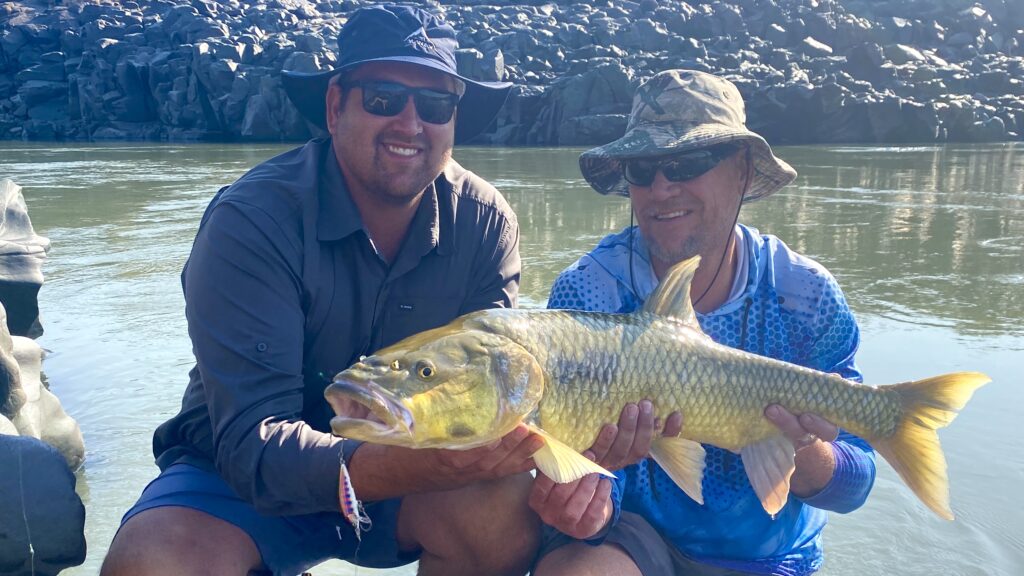
Ready to Put These Yellowfish Lure Techniques Into Practice?
The lures discussed in this article have earned their place through years of fishing and guiding on the Orange River. Understanding when and where to use them is often more important than the lure itself.
If you would like to learn how I approach lure selection, fish location, structure, current seams and presentation on the water, consider joining me for a guided Yellowfish fishing experience at Slypsteen Safari’s in the Northern Cape.
Whether your goal is catching your first Yellowfish on an artificial lure, improving your lure fishing skills or targeting a trophy Largemouth Yellowfish, I can help shorten the learning curve and show you the techniques I use throughout the season.