What Is Lure Presentation?
One of the biggest mistakes many anglers make on the Orange River is focusing too heavily on lure choice instead of understanding lure presentation on the Orange River.
Anglers often change colours, sizes, and lure styles repeatedly while the real problem is how the lure is being presented through the water.
Lure presentation is the combination of lure speed, direction, depth, and behaviour as it moves through the river. While the lure itself may imitate a baitfish, the way it behaves in the current often determines whether a Yellowfish accepts the presentation or ignores it completely.
Many anglers assume fish are reacting primarily to the lure. In reality, Yellowfish are often reacting to how naturally the lure moves through the feeding zone.
A perfectly chosen lure can still fail if the presentation appears unnatural, while an average lure can become extremely effective when presented correctly.
This is why experienced Orange River Yellowfish guides and anglers spend far more time thinking about current, casting angle, retrieve speed, and fish behaviour than constantly changing lures.
Understanding presentation allows anglers to adapt to changing conditions and consistently produce fish under a wide variety of river situations.
Understanding Lure Swing Presentation
One of the most productive presentations for Orange River Yellowfish can be the lure swing presentation.
However, many anglers make the mistake of assuming it should be used all the time. In reality, the success of a lure swing depends heavily on fish behaviour and feeding conditions.
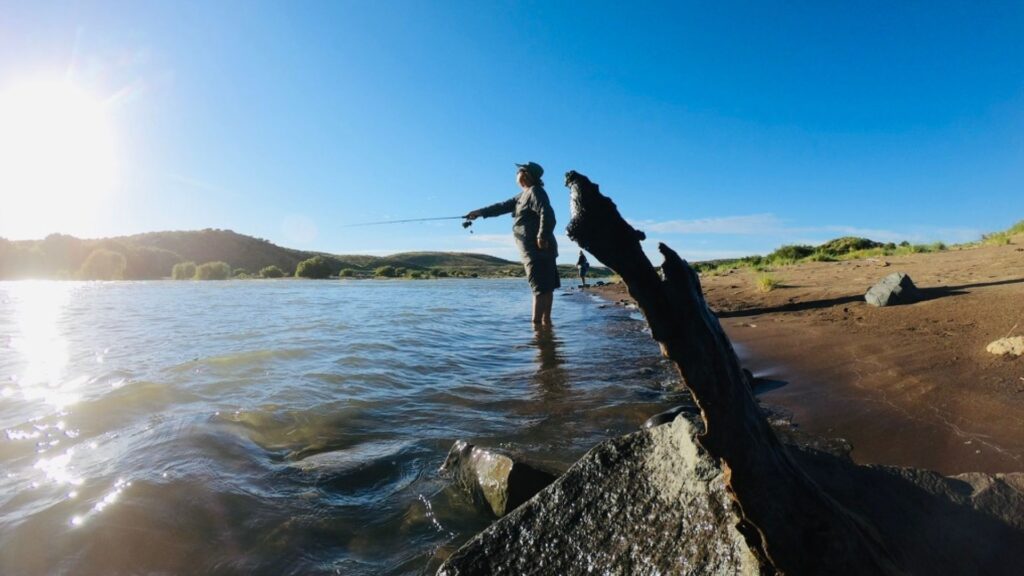
When using a lure swing presentation, the angler casts across the current and allows the flow to grab the lure and swing it through the feeding zone.
This creates a faster-moving presentation that closely resembles a fleeing baitfish attempting to escape the current or avoid a predator.
When Yellowfish are aggressively feeding, this presentation can be extremely effective. Active fish are often willing to chase prey and react instinctively to movement.
In these situations, the faster lure speed created by the current can trigger powerful reaction strikes from both Largemouth and Smallmouth Yellowfish.
The situation changes when fish are feeding less aggressively.
During slower feeding periods, clear water conditions, pressured fish situations, or times when Yellowfish are holding cautiously in productive water, a fast-moving lure can have the opposite effect.
Instead of triggering a strike, the presentation may move through the feeding zone too quickly or appear unnatural to fish that are not willing to chase.
This is where a straight retrieve often becomes the better option.
By reducing lure speed and maintaining greater control over the presentation, the angler can keep the lure in the strike zone longer and present a more vulnerable target. Rather than imitating a fleeing baitfish, the lure now behaves more like prey that can easily be intercepted.
Understanding when to use a lure swing and when to use a controlled straight retrieve is one of the biggest differences between simply casting into productive water and consistently catching Yellowfish under changing Orange River conditions.
Why Casting Angles Matter More Than Most Anglers Realise
Many anglers think of casting angle simply as the direction they throw the lure. In reality, casting angle is one of the most important tools available for controlling lure presentation on the Orange River.
A casting angle changes how the lure behaves in the current and therefore directly controls its presentation.
Even when casting to the same target area, approaching it from different positions in the current can produce completely different lure actions. The same lure retrieved at the same speed can behave very differently depending on whether it is presented from upstream or across the flow, as each angle changes how the current interacts with the lure and how fish perceive the presentation.
A cast across current allows the river to grab the lure and accelerate the presentation as it swings through the seam. This often creates the fast-moving fleeing baitfish behaviour that aggressive Yellowfish find difficult to ignore.
Casting downstream or along a seam while standing upstream from the target area creates a slower and more controlled presentation. Instead of rapidly swinging through the strike zone, the lure remains in productive water for longer and gives less aggressive fish more time to react.
This often becomes a better choice when Yellowfish are feeding cautiously or conditions are difficult.
Upstream presentations create yet another behaviour. Depending on current speed and retrieve rate, the lure can drift naturally with the flow while maintaining a controlled speed through the feeding zone. In some situations this creates one of the most natural baitfish imitations available to the angler.
However, if you want the lure to dive and maintain depth in the current, its retrieve speed must be significantly faster than the speed of the flow.
This presentation is often most effective when fish are feeding aggressively and tends to produce fewer strikes when Yellowfish are feeding cautiously.
The mistake many anglers make is using the same casting angle repeatedly regardless of conditions.
Experienced Orange River Yellowfish fishing guides and anglers constantly adjust their position and casting direction towards the same spot until they find the presentation that best matches the behaviour of the fish on that particular day. Once they find the presentation that works, they continue applying the same approach as they move along the river.
Instead of asking, “Which lure should I use?”,
a better question is often,
“Which casting angle will create the most natural baitfish behaviour for the conditions in front of me?”
Positioning Yourself Before the Cast
Many anglers focus entirely on the cast itself while giving very little thought to where they are standing. On the Orange River, your position relative to the current often determines the quality of the presentation long before the lure even enters the water.
Changing position by only a few metres can completely alter the lure speed, depth, and the amount of time the lure remains inside the feeding zone.
Because of this, experienced anglers often move first and cast second.
One of the most common mistakes is remaining in a comfortable position and trying to force the presentation to work from there.
While the lure may still reach the target area, the current often pulls it through the strike zone too quickly or creates a presentation that does not match the behaviour of the baitfish.
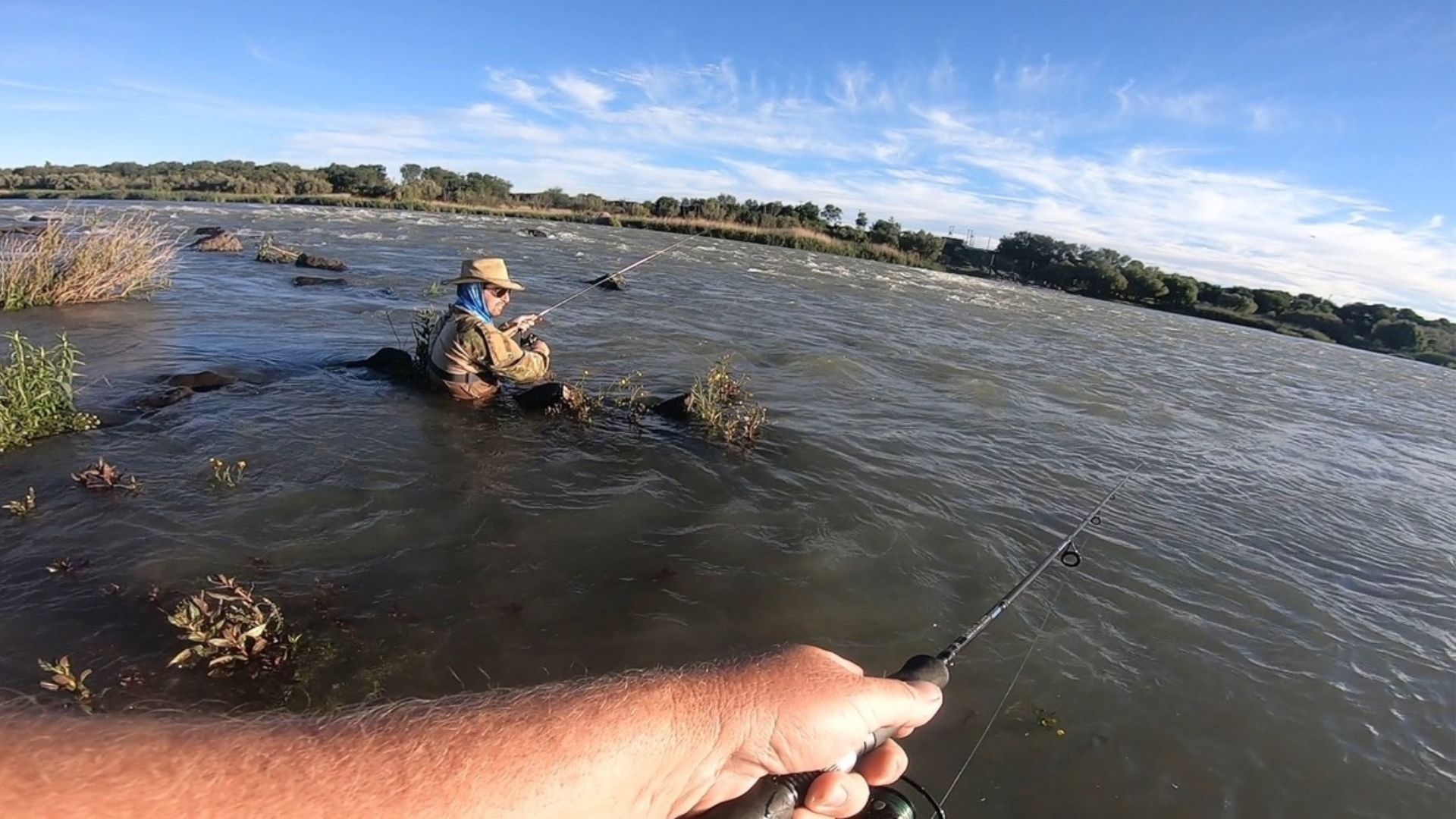
Wading can be one of the most effective ways to improve lure presentation.
By entering the water and adjusting your position relative to the current seam, structure, or feeding zone, you gain far greater control over how the lure behaves throughout the retrieve. In many situations, a small change in position produces better results than changing lure colour, lure size, or retrieve style.
This becomes even more important when Yellowfish are feeding cautiously.
Aggressive fish may react to a wide range of presentations, but less active fish often require the lure to move through the feeding zone at exactly the right speed and angle to imitate injured baitfish. Proper positioning allows the angler to create that presentation more consistently.
Experienced Orange River Yellowfish fishing guides therefore spend a great deal of time helping anglers position themselves correctly before making the first cast. In many situations, improving the angle of presentation produces immediate results without changing any tackle at all.
Why Most Anglers Retrieve Too Fast
One of the biggest mistakes anglers make on the Orange River is retrieving their lures too quickly through productive water.
In many cases, the angler is not only retrieving the lure with the reel, but also unknowingly adding to the speed of the current and swing to the presentation.
The result is a lure that moves through the feeding zone much faster than intended. While this may still produce strikes when Yellowfish are feeding aggressively, it often becomes a major problem when fish are feeding cautiously or conditions are difficult.
slowing down often catches more fish
Many anglers assume that if a lure is moving and vibrating correctly it must be fishing effectively.
In reality, the most important question is whether the lure speed matches the behaviour of the baitfish. A presentation that appears perfect to the angler may still be moving far too quickly for a Yellowfish that is unwilling to chase.
This is where many follows and refusals originate. The fish may notice the lure, investigate it, and even follow it for several metres, but the presentation does not behave naturally enough for the fish to fully commit.
If you regularly experience Yellowfish following a lure without committing, our guide on why Yellowfish follow lures without striking explains the most common causes and how to convert more follows into bites.
One of the biggest lessons experienced Yellowfish anglers eventually learn is that slowing down often catches more fish.
A lure that remains inside the feeding zone for longer gives fish more time to inspect, follow, and ultimately decide to strike.
This does not mean slow presentations are always better. Aggressively feeding Yellowfish often respond extremely well to fast-moving presentations, particularly when a lure swing is imitating fleeing baitfish. The key is understanding when fish are willing to chase and when they are not.
River conditions often play a major role in how aggressively Yellowfish feed. Understanding how changing water conditions affect feeding behaviour can help you choose the most effective presentation.
Experienced Orange River Yellowfish fishing guides and anglers therefore focus less on retrieve speed alone and more on how retrieve speed combines with current speed, casting angle, and fish behaviour to create the final presentation.
Before Changing Lures, Change the Presentation
One of the most common mistakes anglers make when fishing the Orange River is changing lures too quickly.
After a few unsuccessful casts, many anglers immediately start changing colours, sizes, or lure styles without first considering whether the presentation itself is the problem.
In many situations, the fish are not rejecting the lure. They are rejecting the way the lure is moving through the water.
A simple adjustment to casting angle, retrieve speed, body position in the river, or presentation style can completely change how the lure behaves in the feeding zone.
The same lure that produced no interest a few minutes earlier can suddenly become effective simply because it is now moving naturally through the current.
Experienced anglers therefore view lure changes as one of the final adjustments rather than the first. Before opening the tackle box, they first experiment with different casting angles, different positions in the current, and different presentation speeds.
Very often the solution is not a new lure.
The solution is presenting the same lure in a way that better matches the conditions and the behaviour of the fish.
Final Thoughts
Understanding lure presentation on the Orange River is one of the most important skills an angler can develop.
One of the biggest differences between average anglers and consistently successful Orange River Yellowfish anglers is understanding that lure presentation often matters more than lure choice.
Casting angle, retrieve speed, body position in the river, and the way current interacts with the lure all influence how the presentation is perceived by the fish.
Small adjustments in these factors can completely change the way a lure behaves in the feeding zone.
Many anglers spend too much time searching for the perfect lure while overlooking the importance of presenting that lure naturally.
In many situations, changing the presentation will produce results long before changing the lure itself.
The next time fishing becomes difficult, resist the urge to immediately reach for another lure. First consider how the lure is moving through the water, how the current is affecting the presentation, and whether the behaviour of the lure matches the conditions and feeding mood of the Yellowfish.
Successful Orange River Yellowfish fishing often depends more on presentation than lure selection.
Understanding lure presentation is not simply another technique. It is one of the most important skills an Orange River angler can develop.
Experience Orange River Yellowfish Fishing
Learn how presentation, river positioning, and current control come together on guided Orange River Yellowfish fishing experiences in South Africa’s Northern Cape.