Written by Jacques Schoeman
Professional Orange River Yellowfish Guide | Bo Karoo Fishing
Updated: 2 June 2026
Reading Time: 4 min
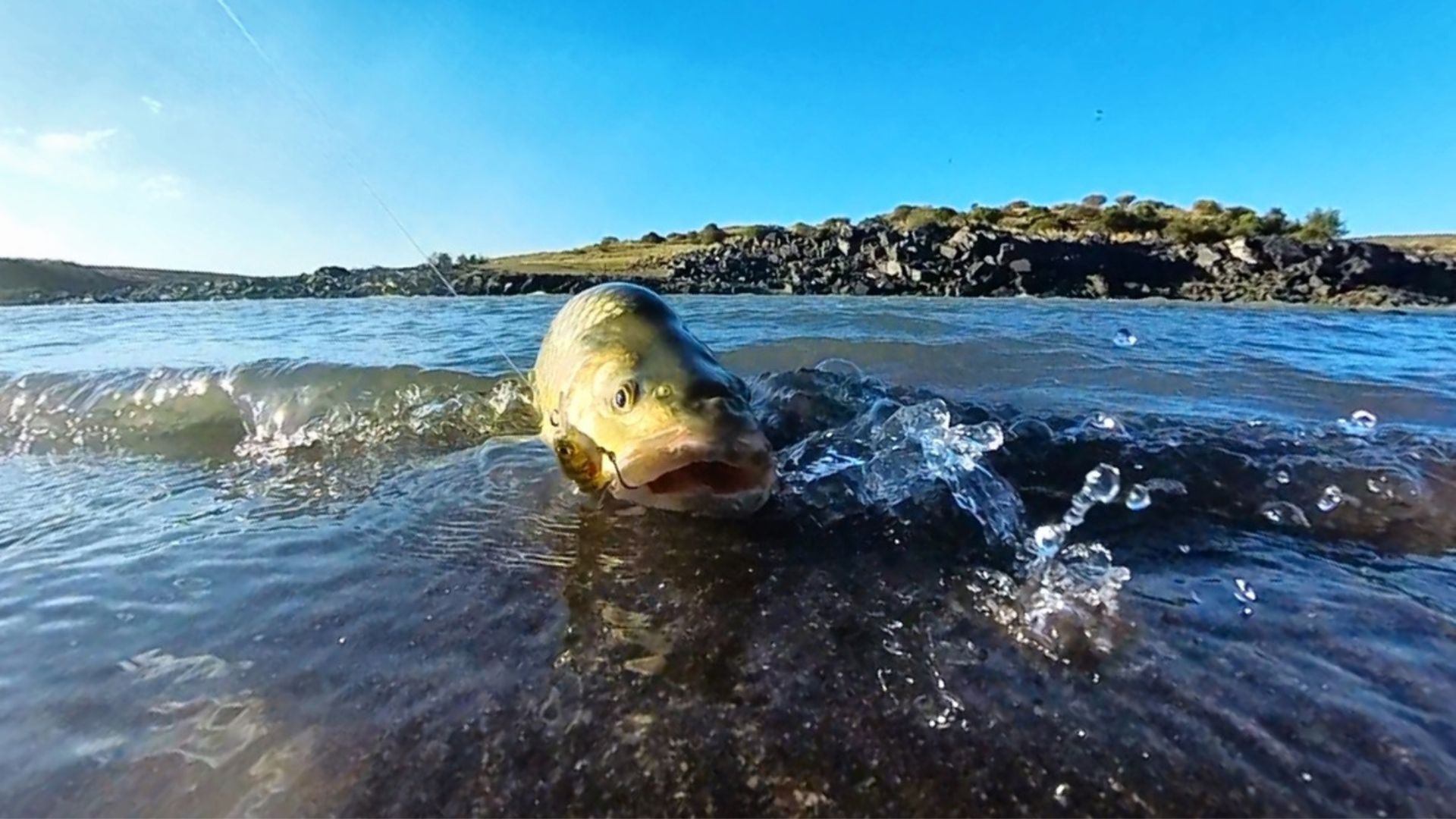
Why Yellowfish follow lures without striking is one of the most common questions anglers ask after seeing a fish track a lure all the way to the bank before turning away at the last moment without committing to the strike.
Many anglers immediately assume the fish are not feeding or that the lure itself is wrong. In reality, a follow is often a positive sign.
The fish has noticed your presentation, shown interest, and reacted to it.
While it is not the response we ultimately want, it provides valuable information about how the fish are behaving and how they perceive the lure.
Over years of guiding on the Orange River, I have found that a following Yellowfish is often telling the angler that something about the presentation is close to being correct, but not quite convincing enough to trigger a full commitment.
Many of the principles discussed in this article are explored in greater detail in my Orange River Yellowfish Fishing Guide, where I explain how fish behaviour, lure presentation, and river conditions work together to influence success.
The good news is that a follow gives anglers an opportunity to solve the puzzle and make adjustments that can often turn followers into committed fish.
Why A Follow Is Actually Good News
When a Yellowfish follows a lure, several important things have already gone right.
The angler has successfully located fish, presented the lure in the correct area, and triggered a reaction. Many anglers make the mistake of immediately leaving the area or changing everything about their approach after seeing a follow.
In my experience, this is often unnecessary.
A follow confirms that fish are present and willing to investigate the presentation. The challenge is no longer finding fish. The challenge is understanding why they are refusing to commit.
Why Yellowfish Follow Lures Without Striking
On the Orange River, I regularly see Yellowfish follow a lure several times without committing.
In many of these situations, the fish are clearly interested, yet something about the presentation is causing hesitation.
A small adjustment to retrieve speed, casting angle, or lure colour is often all that is needed to turn a follower into a fish on the end of the line.
One of the common mistakes anglers make is assuming the fish are not feeding.
If a Yellowfish is actively following a lure, it is often not a feeding problem. It is a presentation problem.
Situational awareness can provide important clues. Paying attention to what baitfish are doing is often one of the best places to start.
If baitfish are active and Yellowfish are reacting to your lure by following it, the fish are clearly interested in what they are seeing. Something about the presentation simply does not look natural enough to trigger a strike.
In my experience, lure speed and presentation angle are usually the biggest factors.
A lure that moves unnaturally fast through the current often causes hesitation.
Likewise, an incorrect casting angle can cause the lure to swing too quickly through the feeding zone. The fish may follow, inspect the lure, and then turn away because something feels wrong.
Many anglers immediately start changing lures when the real issue is often how the lure is moving through the water.
Before changing tackle, it is worth taking a closer look at the presentation itself.
Why Yellowfish Turn Away At The Last Second
One of the most frustrating situations in Yellowfish fishing occurs when a fish follows a lure all the way to the rod tip before suddenly turning away.
In many cases, this behaviour is not a sign that the fish is not interested. In fact, the opposite is often true. The fish has already committed enough energy to leave its holding position and inspect the lure closely.
Yellowfish are visual predators and will often use the final moments of a retrieve to assess whether a lure looks natural. If something appears unnatural, such as an inconsistent retrieve speed, visible braid caused by a leader that is too short, an unnatural swimming action, or a poor presentation angle, the fish may reject the lure at the last second.
Leader length is often overlooked but can play an important role in reducing line visibility. As a general guideline, a clear nylon or monofilament leader of at least 50 cm should be used between your braid and lure. In very clear water conditions, extending the leader to around 100 cm can create a more natural presentation and reduce the likelihood of fish refusing the lure at the last moment.
Water clarity also influences how closely Yellowfish inspect a lure. In clear water, fish have more time to identify details that appear unnatural, which often explains why they follow confidently but fail to commit to a strike.
Retrieve speed is another important factor. A lure moving too fast may trigger interest but not provide enough opportunity for the fish to commit. Conversely, a lure moving too slowly can allow the fish too much time to analyse the presentation. In some situations, increasing the retrieve speed can trigger a reaction strike, causing the fish to attack instinctively before it has time to closely inspect the lure.
When Yellowfish repeatedly turn away at the last moment, treat it as valuable feedback rather than a failure. The fish has already shown interest. Small adjustments to lure presentation, retrieve speed, or lure size are often all that is required to convert a follow into a strike.
For a deeper look at how casting angles influence Yellowfish behaviour and lure presentation, see our dedicated guide on fishing different casting angles.
Lure Presentation on the Orange River: How Casting Angles Affect Yellowfish
How To Convert Follows Into Strikes
Unfortunately, there is no silver bullet answer.
Converting follows into strikes is usually a process of eliminating presentation mistakes until the fish finally commits.
However, this process is often limited by the number of opportunities the fish gives you. If the fish loses interest and stops following, the chance to make further adjustments disappears.
The first adjustment should normally involve retrieve speed. Sometimes slowing the lure down creates a more natural presentation and gives the fish more confidence to strike.
In other conditions, increasing the speed can trigger a reaction strike from a fish that is following out of curiosity, normally in warmer water.
Pausing the lure can also produce results. A brief pause often imitates an injured or vulnerable baitfish and may be enough to convince a following fish to commit.
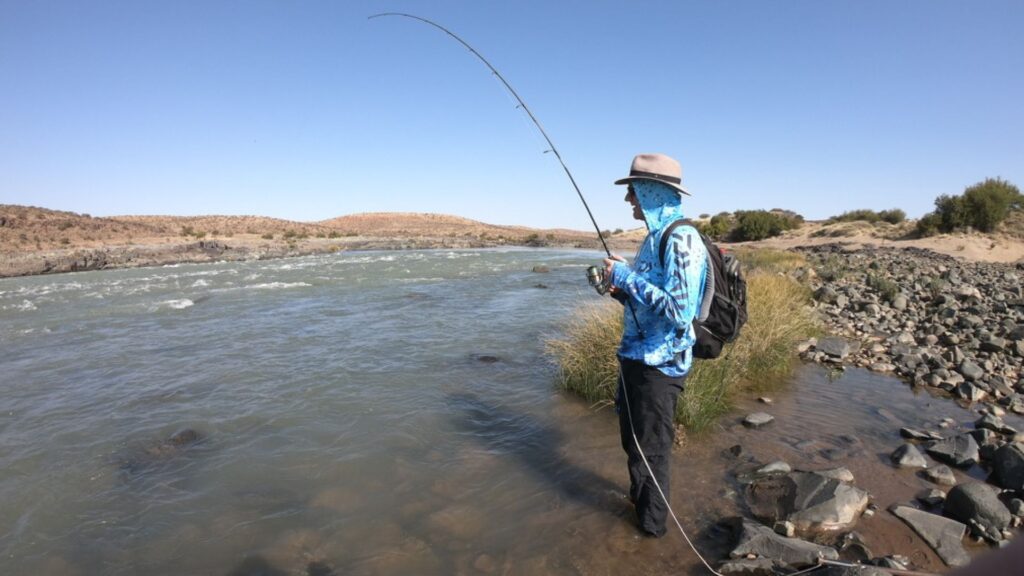
Small changes to casting angle can be equally effective. By adjusting the angle of the cast, anglers can change how the lure swings through the current and how naturally it moves through the feeding zone.
Not every adjustment will work, but when an angler correctly interprets the fish’s behaviour and makes the right change, the reward is incredibly satisfying.
When To Change Lure Colour Or Lure Size
Lure colour is usually not the first thing I change when Yellowfish are following without striking.
My focus is almost always on presentation speed, casting angle, and retrieve control first.
If I am confident that the presentation looks natural and the fish are still refusing to commit, then it may be worth experimenting with colour.
In some situations, switching to a brighter colour pattern or a lure with additional flash can trigger a stronger reaction.
A colour change will not solve every follow, but it can sometimes be the final adjustment that turns interest into a strike.
In some situations, the size of your lure may be the issue, and switching to a smaller lure can make Yellowfish more confident and willing to strike what they perceive as prey.
Final Thoughts
Understanding why Yellowfish follow lures without striking can completely change the way you approach follows on the Orange River. Once you recognise the reasons behind this behaviour, small adjustments to presentation, retrieve speed, lure size, and casting angle can often turn frustrating follows into committed strikes.
One of the most satisfying moments in Yellowfish fishing is converting a follower into a fish on the end of the line.
Not every follow will become a strike, but every follow provides a clue. The anglers who consistently catch more Yellowfish are often the ones who pay attention to those clues and make thoughtful adjustments rather than randomly changing tactics.
Sometimes success is not about finding a new fish. It is about making the right adjustment to a fish that is already interested, and anglers who can outsmart those fish are often rewarded with a catch.
Learning to interpret fish behaviour is one of the biggest steps an angler can take toward becoming more successful on the Orange River.
If you would like to shorten the learning curve and experience these techniques first-hand, a guided fishing trip provides the opportunity to see how presentation, fish location, and river reading work together in real conditions.
Enjoyed this article?
Explore more Orange River Yellowfish techniques, lure presentation tips, fish behaviour insights, and practical fishing advice on the Bo Karoo Fishing Blog.